History Isn’t Being Erased. It’s Being Engraved.

As the protests following the death of George Floyd have mushroomed into a broad-based nationwide movement for criminal justice reform and racial equality, we have seen scores of statues and monuments associated with slavery and the Confederacy toppled. And on the heels of these dismantled monuments, like clockwork, traditionalists have emerged from the woodwork to admonish the protesters against “trying to erase history.” They would argue that we should leave intact these statues—which memorialize people who fought and died to protect the institution of slavery—because to destroy them would constitute an Orwellian revision of our history that would doom us to repeat it.

But to tear down these monuments to the progenitors of our nation’s greatest sin would not be to erase our history. In fact, it would accomplish the exact opposite: it would help accelerate the generations-long, arduous process of moving this horrific era in our nation’s past from the most accessible layers of our cultural memory, where it currently resides, to our history, where it belongs.

The distinction between memory and history is crucially important, because history is nothing more than a catalog of events that have filled our nation’s history, but memory is what those events mean to us and how we carry them today. We don’t get to choose our history, but to a large extent, we get to choose our memory. What is happening right now in cities across the nation is a rare and remarkable thing: enormous, powerful masses of American citizens declaring, in real time, that America’s shameful story of slavery belongs in its history, not in its memory. 

To remove something from our memory is not to diminish its importance or deny that there are valuable lessons (very valuable lessons) to be drawn from a certain piece of history. It is simply to assert that our children and our grandchildren and every generation thereafter should live in a nation where they study something as history, rather than live it as part of a present reality. In this case, it is an assault not on the history of slavery, but on its persisting legacy, which is perpetuated and reasserted every time someone walks past a Robert E. Lee High School or a Jefferson Davis Boulevard. After all, memory is what ties the past to the present, and to sever that cultural link is a vital step to moving on not just from a piece of history, but from its pervasive and lasting effects.

If citizens or governments don’t take deliberate, decisive action to turn memory into history, there’s no telling how long a piece of history can sit prominently in a nation’s cultural memory. Take Serbia, for example, whose most celebrated national holiday commemorates a battle that took place in 1389. Or look at the Middle East, where geopolitical relationships are complicated by a religious schism that happened in the 7th century. History can have tremendous staying power—sometimes for better, sometimes for worse.

Americans tend not to look at history with as long a view as in most other parts of the world, so it doesn’t seem to occur to many people that this could be an issue that plagues our country for centuries to come. People seem to believe that, with the passage of time, the legacy of slavery will slowly evaporate like a glass of water. Perhaps they’re right. But it’s certainly not difficult to imagine this issue staying in our memory, lodged in our present rather than in our history, for generations and generations.

Doing away with publicly sanctioned monuments to those that fought to preserve slavery goes a long way toward dislodging its legacy from our memory and etching into the checkered annals of our history. It is but a fraction of the work that will be required to make reparations and forge a society anew, but it is among the easiest concrete things we can do right here and right now to move forward. To do so would not be a disservice to American history; the real disservice to American history would be to keep the legacy of slavery in its current role as a bedrock of our cultural memory.

I Have Forgotten How to Eat at a Restaurant

On Sunday, I ate at a restaurant for the first time in three months. Three months! This planet has traversed about 150 million miles of its orbit around the sun since I last ate food at a public establishment. So imagine my great dismay to discover that I have completely forgotten how to eat at a restaurant.

Here are a few things that happened when I tried to gracefully reenter the restaurant-going world:

  • I waited 5–7 seconds for the waiter to indicate to me which chair I should sit in, before remembering that I actually get to choose that myself.
  • It took me several moments to register that there was a separate food and drink menu; the drinks are not listed on the food menu, and the food is not listed on the drinks menu. I turned over each menu at least three times, looking for the other items.
  • I stared shamelessly for minutes at other patrons of the restaurant. I have not seen people eating in public in so long.
  • I accidentally ordered a fucking whiteclaw!!!
  • I accidentally ordered a second whiteclaw, and then a third whiteclaw!!!
  • I accidentally ordered six more whiteclaws!!! That’s nine whiteclaws, ordered by mistake!!!
  • My date asked what an atomic elbow was, so I demonstrated on an unsuspecting patron at the next table! I concussed a stranger, because I have not eaten in a restaurant for so long, and forgot the accompanying social norms!
  • I shit my pants four times! Five, depending how you define a pants-shitting! Did anybody else forget that restaurants have bathrooms?
  • I asked for an affogato made with breastmilk! Can you believe that? How embarrassing that I forgot that many restaurants don’t even keep breastmilk stocked!
  • I tipped my waiter a full 15%, even though he had an eyebrow piercing and I don’t approve of that!
  • I got a DUI on my way home—all because I haven’t been to a restaurant in so long!

White People Didn’t Know This Would Be On The Test

Listen closely. Do you hear it? Do you hear the sound of millions of white people furiously cramming for a test we had 400 years to prepare for?

Nationwide, bookstores and retailers are sold out of titles about how anti-Black racism has remained at the center of our society and how white people of all political persuasions have played an active role in upholding that intolerable status quo. Book clubs are eschewing Sheryl Sandberg for Robin DiAngelo, and local booksellers are placing bulk orders for How To Be An Antiracist

In film too the cramming is apparent, if a bit less heartening. Even as America reopens from the first part of Wave 1 of the first year of the coronavirus pandemic, citizens are staying home to watch The Help (sigh) and 13th (lfg). Even that sacred safe space for white complacency, podcastdom, has been overtaken by a fervor for racial justice.

In other words: at least 401 years after the first America-bound slave was kidnapped, brutalized, and brought to our shores; 237 years after the Constitution falsely claimed that its authors believed all men were created equal; 155 years after the enslaver’s rebellion was put down by force; 134 years after Rutherford B. Hayes traded generations of Black dreams for four years of power; 99 years after Black Wall Street was pillaged and burned by domestic terrorists; 65 years after Emmett Till was murdered; 57 years after Bull Connor’s attack dogs; 55 years after Malcolm X was murdered; 52 years after Martin Luther King, Jr. was murdered; 28 years after Rodney King was beaten; 8 years after Trayvon Martin was murdered; 6 years after Mike Brown and Laquan McDonald were murdered; 3 years after Eric Garner was murdered; 4 months after Ahmaud Arbery was murdered; 3 months after Breonna Taylor was murdered; and 2 weeks after George Floyd was murdered… white people have discovered we may have some work to do to dismantle white supremacy. 

Now, that sounds like a condemnation—and in part, it is. Cramming for a test we’ve had our whole lives to prepare for is deeply embarrassing. But feeling embarrassed and trying to educate ourselves are two of the better things we can do right now. The situation is deeply embarrassing and at the same time it’s encouraging. Understanding that contradiction is central to how we maintain the momentum of the last few weeks.

We wrote after Ahmaud Arbery was hunted and killed that we’d been here before, and that it had all become so sickeningly familiar. Now, this time feels different, no doubt. But for it to actually be different it’s going to require white people to finally do the work we’ve been putting off for half a millennium. 

So reading up, getting educated, and sharing resources is a good start. But it really is just a start, a bare minimum first step, and we can’t lose sight of how much damage has been done by waiting this long. If the last-second studying gets us anywhere, it’ll hopefully be a place where we start to conceptualize the work and time that’s needed to repair that damage. 

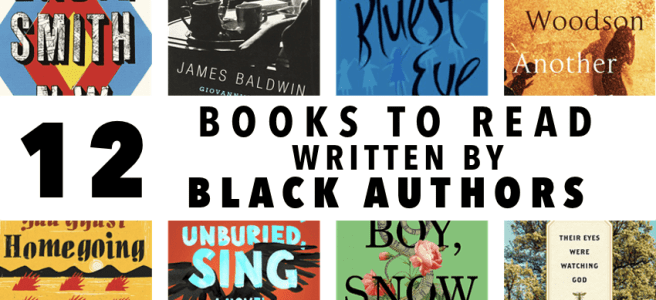
Image credit: 12 Books Written by Black Authors You Won’t Be Able to Put Down ✊🏽✊🏾✊🏿

Textual Healing

Yesterday, the Supreme Court held that you cannot be fired for being gay or transgender.

It was a landmark victory for the LGBTQ community. And for many, the makeup of the 6–3 majority—with Chief Justice Roberts and Justice Gorsuch (who also authored the majority opinion) joining the liberal faction—was as stunning as the end result. 

The decision has been hailed as a leftward shift by the majority-conservative Court. It has been criticized as too cramped a view of LGBTQ rights. And it sure doesn’t end the constant threat to trans lives

But besides the crucial importance of expanding Title VII’s anti-discrimination protections to gay and transgender employees, there’s another key aspect here: Neil Gorsuch (and Roberts) chose textualism over knee-jerk conservatism. 

Five years ago, Justice Kagan declared “we’re all textualists now.” Yesterday, Justice Gorsuch demonstrated that the Court (or at least a sizeable, non-credibly-accused-of-sexual-assault majority of the Court) would adhere to this interpretative tool, even if it led the justices in a direction they might not individually agree with. Or, as another former Maryland resident put it, “A man gotta have a code.”

As the late gabagool himself liked to say, “the text is the law.” When the text is clear, we’re done—legislative intent or real-world consequences be damned. For Gorsuch, the text of Title VII was clear, even if the logical progression of it could result in “massive social upheaval” (whatever that would look like). The Civil Rights Act of 1964 bans discrimination “on the basis of . . . sex.” Firing somebody for “traits or actions” that don’t conform to societal norms about their genetically assigned sex is discrimination on the basis of sex. That’s it. Now let’s all tap elbows and go home and crank through five episodes of Queer Eye and celebrate RBG as the progressive icon we want her to be but not the employer she actually is

What is heartening for me about Gorsuch’s opinion is its intellectual consistency. It means that liberal and progressive causes aren’t dead on arrival at the Supreme Court; they just need to have a persuasive textual hook. Granted, textualism has serious limits, may be based on a flawed and inherently conservative premise, and can lead to plenty of illiberal rulings in the future. And just because you self-satisfiedly tout yourself as a textualist while you steal Merrick Garland’s seat doesn’t mean you’ll have the testicular fortitude to adhere to that doctrine when the rubber meets the road. 

But, for the moment at least, Gorsuch has demonstrated something that the Court often appears to lack: a willingness to keep its legal philosophy consistent in the face of results that the justices themselves may not approve of.

We’ve been playing in the same court. Now it feels like maybe we’re all playing by the same set of rules. 

On the 25th Anniversary of Jagged Little Pill

If you ask me, Alanis Morissette’s Jagged Little Pill, which turns 25 on Saturday, has a case as the best album of the 90s. It is an uninterrupted string of absolute slappers. There is not a single skip track, and of the twelve songs on the album, you could make a compelling case for at least eight of nine of them as her best song ever. It is the rare coalescence of an artist’s near entire anthology of top bangers burned onto one small piece of polycarbonate plastic.

Owning a copy of Jagged Little Pill is like owning a time machine that, by some bizarre design fault, can only transport you to your angstiest moments of the late 90s and early 00s. In a way, the album captures the experience of learning for the first time that things can be unfair, that people can hurt you, that life can suck. The songs depict the broad range of instinctive, almost mechanical ways we respond to this realization, be they anger, frustration, apathy, amusement, forgiveness, or optimism. It strikes me as the type of album that means something different to everyone who listens to it. To me, it brings me back to having frivolous fights with my older siblings in our basement. That an eminently talented and seemingly pretty pissed off 21-year-old (!!!!) Canadian girl wrote an album that resonated with everyone from middle-aged divorcees to whiny youngest children only beginning to learn about the world speaks to how well it really does capture the human condition.

Like any cultural set piece that so eloquently captures a long-lost zeitgeist, it also offers no shortage of retrospective comedic relief. Knowing that the line “would she go down on you in a theater” was directed toward the guy who played Uncle Joey in Full House is something close to euphoria. The line “I’m young but I’m underpaid” is a close scrutiny of Clintonomics that was at least 20 years ahead of its time. And, of course, it is nothing short of hilarious that Alanis gaslit an entire generation into misunderstanding the definition of “ironic.” 

I highly recommend giving this album a relisten this week. If absolutely nothing else, you can get out of this hellshit of a timeline and instead spend 50 minutes in your emotionally overwrought memories of the 1990s.

Proposed Line Items for MLB’s Negotiations to Bring Baseball Back

Baseball’s owners have finally stooped to considering whether or not they’ll return to the negotiating table to discuss with the player’s union if America will have its national pastime back this year. Here are our proposed line items to add to the bargaining process to ensure that the return of baseball is a success:

  • Automatically declare Tim Anderson and Javy Baez the AL and NL MVPs of our hearts, respectively.
  • Finally put the Seattle Mariners out of their misery.
  • 200% more steroids.
  • Give me a firm commitment that I will be able to download an app version of Backyard Baseball to my phone by no later than mid-July.
  • No concrete policy idea here, but can we make this sport a little more fucking exciting?
  • All players must choose among The Outfield’s “Your Love,” Megan Thee Stallion’s “Savage,” or Taio Cruz’s “Dynamite” for their walk-up song. There are no other options. 
    • LoR would be willing to accept a proviso outlining that a player may choose either Megan Thee Stallion’s initial version of “Savage” or Megan Thee Stallion feat. Beyonce “Savage (remix).” 
  • Mandatory racial sensitivity training for all St. Louis Cardinals baseball fans before they’re allowed to tweet. Actually, better expand this to all baseball fans. 
  • Change the Hall of Fame induction rules to make Charlie Blackmon’s beard immediately eligible.
  • Two Pirates–Reds games per year replaced with a three-hour, no-holds-barred, dugout-on-dugout bench-clearing brawl. 
  • Atlanta Braves aren’t allowed to use the name “Atlanta” until they move back within the city limits. 
  • I get to hit Bud Selig.
  • Send all Cubs fans a $10.50 cup of warm Bud Light and an audio recording of Karen from Naperville loudly insisting that “all lives matter” to simulate the gameday experience at Wrigley Field.
  • Force Joe Buck to run blindfolded in front of the pitcher’s mound every half inning.
  • Any team with a baby-blue throwback uniform required to wear it until there’s a new CBA (yes that’s over half the league) (and yes that last one was a stretch). 
  • Defund Tom Ricketts. 

Introducing: Google

It’s been a crazy couple of weeks, huh? One day, you’re carelessly walking down the street singing Lana del Rey. The next day you find out that DESPITE Green Book winning Best Picture, racism is APPARENTLY still a thing??? It’s wild. At times like these, you instinctively want to turn to your friends who are knowledgeable about what’s going on to get support. However, after realizing your friends are pretty fucking white, you have decided to turn to an even better source of support: That one black person from your junior year English class that you’re pretty sure you worked with on a group project. You ask them everything, from where to donate, to how to protest, to how to define the word “systemic”. And UGH (!!!) they’re all like, “I’m sorry, but I do not have time to talk to you about this and also I wasn’t in your English class.”

Well, despite their selfishness, I have good news for you: I have discovered a new tool that will help answer all of your pressing questions. Introducing: Google.

For the uninformed, Google is an A-MAZ-ING thing on the internet that lets you discover relevant information. From “What is racism?” to “Are you sure I can still be a racist if I like the movie Barbershop?”, Google is a gateway to sorting out all of the questions that are driving you crazy, but you can’t seem to find a black distant acquaintance to answer. Best of all, Google will connect you with a bunch of other crazy new tools that can help fill in your knowledge gaps—like Reddit, for finding out whether you can be a furry and a racist at the same time (you can!), or Twitter, for discovering whether people will threaten a hate crime on a public forum (they will!).

During this uncertain time, we are all looking for answers. With Google, you have that knowledge at your fingertips. Now, go forth and educate yourself—then spend twelve times as much time repeating and iterating the small bit of knowledge you learned. We’re counting on you. 

Six Oligarchic Societies That Voluntarily Surrendered Power

I know things seem bad lately, what with all of the murder of people of color and mass layoffs while executives take fat bonuses. However, now is not the time to go do something crazy, like doing literally anything that could possibly have the slightest impact on how society currently functions. We have to be more decent than that. In fact, there is reason to believe this reckless abuse of power will subside over time if we pray and smile real hard. Here are six abusive, oligarchic societies that willingly surrendered wealth and power without anyone doing anything. 

  1. …Err….
  2. Ummm….
  3. I mean….
  4. ……I’m sure there’s…
  5. AHA! What about… oh fuck, not them.
  6. Shit.

Well there you have it. Everybody stop your asserting humanity and taking essentials from corporate chains, and just *RUNS TO LOCK GATES AROUND MANSION*