More Cities Should Have Color Schemes

I was in Pittsburgh recently, and more than the prevalence of Italian Americans, the palpable racial tension via gentrification, and the fact that their baseball team recently got no hit by Lucas Giolito, the most striking thing about the city was its commitment to its color scheme. Pittsburgh is all about the black and yellow, and I think that’s an admirable thing that more cities should strive for. 

All of Pittsburgh’s major sports teams’ color palettes prominently feature black and yellow: the Steelers, the Penguins, and the city’s AAA team, the Pirates. The city’s bridges (of which there are several!) are painted yellow. Even the college team (Pitt, not Carnegie Mellon, presumably because nobody from Pittsburgh made it through high school trig so they could get into Carnegie Mellon) has yellow golden hues, or straight-up yellow at its most glorious. And let’s not forget the national anthem of partying in early-Obama-era frat basements, which beats Coldplay by a yinzer mile for the title of the greatest ode to yellow.

What’s shocking to me is that there aren’t more cities who have committed to a color scheme. They’re great! They give a city a better sense of unity. They forge an aesthetic and cultural connection between the city, its residents, and its sports teams. And they help define the vibe of a city—Pittsburgh’s black and yellow is brawny and industrial, while Seattle’s wild collection of blue and neon green is pacific and alt. 

But besides Pittsburgh and Seattle, I can’t think of a team with anywhere close to a cohesive color scheme. D.C. comes the closest—it has a strong affinity for red and blue, but the Washington Professional Football Team’s burgundy and gold is nowhere close to the color schemes of the Nats, Capitals, Washington Professional Men’s Basketball Team, or Mystics. And, honestly, red and blue for the nation’s capital? A little uninspired if you ask me. 

L.A. has too diverse a sports scene to be anywhere close to unified, but I do appreciate the hues of gold, blue, and purple among teams like the Lakers, Rams, Chargers, Galaxy, Sparks, and UCLA Once-Relevants. Atlanta also does a good job with its red and black vibes (Braves, Falcons, Atlanta United, and the Hawks whenever their jerseys aren’t create-a-jerseys designed by a 4th grader). 

But come on. How have more cities not committed to this? How have Chicago’s sports teams not done more to incorporate the Chicago flag that half the city has tattooed on its calves? How come only the Coyotes and sometimes the Diamondbacks commit to Arizona’s desert hues? And why can’t Denver get its shit together and organize a cohesive take on its truly spectacular flag and/or Nuggets throwbacks

If a city like Pittsburgh is able to figure this out, then surely Houston can hire somebody to get the Rockets and Texans on the same page as the Astros and Dash (or just return the Rockets to either of these throwbacks, please). Or, for a very reasonable fee, I’m willing to consult with Las Vegas and encourage them to change their colors to “all reds.” 

Thank you for your time. 
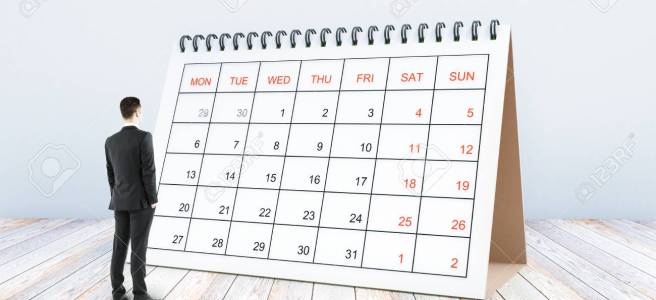
How Long Ago Was That Month?

January: did not happen, largely agreed to be a myth

February: 18.75 years ago

March: 356 million years ago, was part of the Paleozoic era

April: 26 years ago, so according to our data most of our readers are still in diapers, just shitting themselves at will

May: May was actually in the year 2003, we are invading Iraq sorry

June: 3 weeks ago

July: it is currently July

August: not expected to occur this year

September: September hasn’t happened since 2015, at the latest

October: it is also currently October

November: 9 years from now, in postal service delivery times

December: again, there is no evidence that December will occur this year

Trump’s Most Likely October Surprises, Ranked

8. Replacing Mike Pence. If this was going to happen, by the rules it would have to be done at the convention. But the rules* also say you can’t have your attorney facilitate hush money payments to your porn star mistress during a campaign, so I feel like we can’t rule this out. It’s definitely the least likely item on the list, mainly because Trump values loyalty above all else and Pence has been a sycophant’s sycophant for his entire term.
*laws

7. Mass tribunals for BLM protesters. We’ve seen Tennessee announce that engaging in protests would result in a forfeiture of voting rights, and Trump already sent the secret police to create violence in Portland. So they’re not being terribly creative here, just kind of running down a totalitarian checklist for engaging with the opposition. Feels like show trials should come up fairly soon.

6. Banning mail or something. It almost feels inevitable at this point that we’re gonna reach a stage where sending mail items through the USPS is going to be a fierce act of #resistance.

5. War :). Remember how much he loved the fawning media coverage of his Syria strike? Now imagine that, but with a country no one’s ever heard of. 

4. Finding a doctor to claim Biden’s senile. This would probably need to be ginned up in the last few days before the election, so the news media doesn’t have time to dig up “facts” that “show this doctor has never had Joe Biden as a patient” or whatever. But still, it wouldn’t be too hard to find someone to make the claim. Is the devil jizz lady still available?

3. Killing his niece on Fifth Avenue. Experts agree, murdering a woman with a firearm could bring Trump’s GOP approval rating up an extra 3-6 percentage points.

2. Announcing charges/investigation into Biden, Hillary, Obama or, idk, someone like that. Again, this is an authoritarian classic, and Bill Barr has shown a somewhat sexual excitement at the opportunity to serve as Trump’s attack dog. It’s hard to imagine exactly what the charges would be (Did Hillary ever send an email about Benghazi? Could be something there), but that would largely be beside the point. Like Comey’s letter in 2016, the aim would just be to get the name of a Democrat in the news alongside words like “corruption” and “federal charges.”

1. Approving a COVID-19 vaccine. It’s hard to call this one a surprise, really. He’s been telegraphing it for months, and the administration is reportedly targeting the (fairly promising!) Oxford University vaccine. Whether he succeeds in making the FDA actually grant vaccine approval before the election, or just unilaterally announces that we have a vaccine now, I have absolutely 0% doubt that Trump is going to claim there’s a COVID vaccine by election day. And honestly I just hope there’s even a crumb of truth to it.

The Worst Wedding Toasts of 2021

Now that a glut of wedding celebrations have been pushed back to next year, we’re facing an unprecedented wedding season in 2021. Here’s the worst wedding speech lines we can expect in the year to come:

“At first, I thought we should take a global pandemic as a sign that the universe didn’t want these two to get married. In fact, I was grateful that Kelly would be forced to spend twenty months together with Ted before making the worst decision of her life. But I’m glad they soldiered through.” 

“May you two deal with adversity far better than the former presidential administration.” 

“And if you ever lay a finger on my daughter, I’ll come to your house and cough in your throat young man.” 

“If these two can survive quarantining together in a New York City walkup for 9 months, then what can’t they accomplish?” 

“Jen is so much prettier than your previous wife, who tragically passed away from massive respiratory failure last April. Wow, pretty fast on the uptake there, Mark.”

“At first, as Heather’s roommate, I was a little worried when she started bringing Jeff around. I mean, had this guy even been tested? Was he hanging out with other people? But then Jeff tested negative for COVID-19 (still waiting for that syphilis test to come back though, haha), and he turned out to be the most loving, thoughtful man not named Anthony Fauci. But Heather, don’t think that just because you’re married now that our nights of socially distanced rosé are over!”

“Margaret is so much prettier than your previous wife, Janis, who divorced you after quarantining 9 months together in a New York City walkup. Wow, pretty fast on the uptake, there, Steve.”

“I’m glad that you two can put an end to all that social distancing tonight, if you know what I mean. No but seriously this couple can get freakier than the toilet paper line at Costco during the first day of a stay-at-home order.”

“Folks, did you see that ring that Brett bought? I know that saving three months worth of salary is a little outdated, but man those $600 relief checks sure go a long way.”

“My sister Rachel is an absolute saint. While some of us continued partying in New Orleans weeks after the virus hit, there was good old Rach, calmly explaining to me that I needed to wear a mask if I wanted Aunt Carol to make it to the wedding tonight. Everybody, give it up for Aunt Carol, who survived 18 months in isolation in her Seattle nursing home to be here!”

“Dave, you are the Joe Exotic to my Travis Maldonado.”

“We’re so delighted those of you with antibodies were able to make it to our celebration. Thank you for getting tested in advance of our big day. We never thought we’d enjoy having a wedding with four guests so much!”

“I knew John had found the love of his life when he named his sourdough starter after Katie. Let’s raise a glass that their love continues to rise forever.”

“By the time Michael agreed to meet in person and take his mask off after all of our Sip n’ Zoom Thursdays, I didn’t even CARE what he looked like anymore. I was just ready to be touched again.”

“Sam, you are the missing jigsaw piece in my life, unlike the final piece to our Monet water lilies puzzle we started in March and couldn’t finish because the dog you fostered ate it.”

“Just look at the way these two stare at each other: like Nicolas Maduro stares at hydroxychloroquine tablets.”

“I hope these two have an amazing time in their honeymoon to the only nations that are letting Americans in right now: Albania, Belarus, and Belize!”

“Joshua, love is like the WHO: it’s a powerful bond that can only be broken when one party unilaterally prioritizes its own autonomy over the common good.”

“Aren’t we grateful that the airline industry survived this so we could all be here in Hawaii together to celebrate Chad and Melissa’s big day?”

“Kiki, don’t forget to wash all of those gifts in boiling water, let them rest in your garage for 24 hours, and sanitize them with Clorox wipes and bleach. You can never be too careful these days!”

“When Lisa asked me to write this speech, I googled the definition of ‘pandemic.’ It means ‘an outbreak of a pandemic disease.’ And that’s what Lisa and Jeff’s love is like.”

“In case you were wondering—yes it’s DEFINITELY a quarantine pregnancy.”

Trump’s COVID Response Is Reaganism Defined

On Oct. 15, 1982, President Reagan’s press secretary was asked about a newly discovered virus that was in the midst of devastating certain subsections of American society. The room laughed, the questioner persisted, and the official White House response to the disease was “I don’t have it, do you?”

The virus was HIV, and that reaction would set the tone for the federal government’s reaction over the ensuing decade. They ignored the deadly disease as it ravaged communities from coast to coast, because the people who were being killed were people they didn’t care about. Largely gay, often urban and poor, sometimes sex workers—these were not lives the White House felt mattered, or at least not enough to protect.

Fast forward 28 years, and President Trump’s administration has perfected the Reagan model of pandemic response. 

At first they ignored the virus, only taking action if it could be done in a jingoistic fashion. They declined to institute a national test and trace program when one could have still saved us. They waved it off, claiming it might disappear on its own or suggesting mass suicide via bleach injection if we were worried about it. Then once they realized it was disproportionately killing Black, Brown, and poor communities, they encouraged states to lift lockdowns—knowing full well this would spread the virus—and steadfastly refused to promote masks that might have helped at least slow the devastation.

And when the deaths skyrocketed again (as every epidemiologist, virologist, and human with an ability to gather news from anywhere besides QAnon fanboards knew they would)? President Trump did Reagan proud, declaring “it is what it is.” 

As if having a 9/11’s worth of excess human death every 2.5 days was just a fact of life. One happening outside the realm of administration actions and consequences. 

So it’s worth remembering as “decent” Republicans loudly proclaim they want to return to a pre-Trump era of compassionate conservatism, that none of this has ever been terribly compassionate. Not to the most marginalized communities, and not to the groups that were abandoned by their country in the ‘80s and are being abandoned by their government right now. 

RIP to JTE

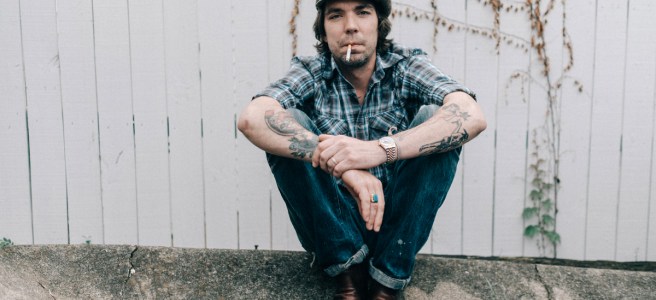
On Sunday evening, news broke that Justin Townes Earle—singer, songwriter, and son of alt country legend and The Wire utility man Steve Earle—passed away at age 38.

There was worse news reported on Sunday. And you can’t really say that JTE’s passing was unexpected—the man was named for Townes Van Zandt after all. But the world is a little bit darker today because a man who made things a bit brighter with his music is gone too soon. 

Mourning the death of an artist, especially one as untimely as JTE’s, often feels like an exercise in reflecting on what they meant to us. For me, Earle’s 2012 album Nothing’s Gonna Change The Way You Feel About Me Now was one of the most impactful records I’ve ever heard by someone in our generation. 

In 2012, I was interning at Bloodshot Records, an alt-country record label with an otherworldly lineup of musicians who have come through its doors. This was not a company that expected to have interns, and I didn’t have much ambition for the job other than to say I got to do something cool and music adjacent (see the first sentence in this paragraph). So I ended up taking two trains and a bus every Tuesday afternoon in 2012 so that I could listen to Fresh Air and stuff media mail envelopes with records that would go out to buyers. That’s how I came across JTE: temporarily assuming title of a copy of Nothing’s Gonna Change from Bloodshot’s stack of CDs it sent out to college radio stations. 

The album sideswiped me. It is deceptively simple: 10 songs clocking in at 30 minutes. There’s so much space between the instruments in the mix, which allows you to practically hear JTE’s fingerprints sliding over the strings of his guitar. The drums sit comfortably in the backbeat, and every song has these beautiful, subtle horn arrangements that come in as cool as a breeze off the river on a humid Memphis night. Earle’s lyrics were vague enough to feel applicable to my own life: songs about quick calls home and half-hearted, self-serving apologies. All this is to say that the album sounded particularly good walking around campus at night, sneaking furtive, self-destructive Marlboro drags and feeling things. 

One of my pinnacle achievements in music (of which there are few) was playing with my band in the side lounge of the same venue where JTE was headlining. It was at a time when my performing dreams were still very much alive, and an artist like Earle made me think they were attainable. But it takes hard work to make simple songs sound as beautiful as he did. It’s easy for any asshole with a drinking problem to pick up a guitar. It’s so much harder to create something as emotionally resonant as Justin Townes Earle did. 

It’s fucked up that he’s gone so soon. And it’s fucked up that my way of remembering him is to think of what he meant to me, purely in the context of myself, and not to think of what his life was like on its own. 

It’s also notable how JTE shows just how much of our fathers we carry in ourselves. How our dads give us our name (“Townes” and “Earle” for Justin, as if one whiskey-and-cocaine-drenched chain wasn’t heavy enough to carry) and then give us the tools to deal with it, for better or for worse. How we take the good and bad from them in equal parts. 

For Justin, he built on his dad’s approach to songwriting—one that fused a traditional guitar technique and country feel onto modern subject matter—in a way that developed his own reputation rather than sit in father’s shadow. I know I’d rather listen to just about any JTE album than a Steve Earle record. I mean, just listen to that percussive way he fingerpicks his guitar here (my all-time favorite Bruce Springsteen cover) in a manner that’s clothed in decades of tradition but also 100% original.

But he also got the bad side of his two namesakes. The cocaine, the pills, the drinking, and the questionable facial hair. You don’t need to live like the people JTE wrote about to write such melancholy and honest songs as he did. But he tried. 

When you lay down to sleep that’s when it’ll hurt the most
When you wake up alone and still smell my smoke

Some stars are tragic, and we love them for it. JTE wore his tragedy in the tattoos on his forearm and in the grooves of his music. RIP to a real one.

The Spectrum of Autumnal Sad Music, As Drugs

Taylor Swift, folklorCBD
The National, I Am Easy to Find: Marijuana
Sun Kil Moon, Benji: Heroin
Sufjan Stevens, The Age of AdzEcstasy
Father John Misty, Fear FunCocaine
Phoebe Bridgers, PunisherLSD purchased from your neighborhood feminist co-op
Counting Crows, August and Everything After: Ibuprofen and white wine
American Football, American Football: Weed dust that’s been emptied onto a Pavement CD while you sit in your mom’s Corolla. 
Cannonball Adderley, Somethin’ ElseMethadone 
Elliott Smith, Either/OrKetamine
Bon Iver, Bon Iver, Bon IverMushrooms
Wilco, Yankee Hotel Foxtrot: Revolution Anti-Hero IPA
Van Morrison, Astral WeeksSandalwood-scented incense candle