EXCLUSIVE: The tracklist for Sufjan Stevens’ upcoming album has been leaked

LoR has obtained the tracklist for Sufjan Stevens’ upcoming album, Etsy Handkerchiefs. Check out these surefire bangers:

  1. goodbye happiness, etude no. iii
  2. Wall, SD
  3. I Wish I Had Been Better Friends with Phil, the Guy Who Played Euphonium in Concert Band in High School
  4. # Actually Should Be Referred To As “Pound Sign,” Not “Hashtag”
  5. Toward a More Progressive Tax Policy in the Kingdom of Sheba
  6. Sic Semper (Rick) Moranis
  7. Get Paroxysmal!
  8. Everlane’s Shipping Costs are Too Dang High
  9. Feline AIDS
  10. Michael Dukakis
  11. Herpetology x Ornithology
  12. Tripping Acid on the Feast of Saint Joseph Day
  13. Andrew Bird Hath Released All Of My Bees, or, Our Prank War Has Escalated Into Me Stealing All Of His Old Timey Cartography Tools, or, Holy Balls I Dropped Andrew Bird’s Sextant on My Foot and it Hurts Like a Motherfucker
  14. How Do I Get Glitter Out Of My Bedsheets?
  15. Pontius Pilate’s Waltz
  16. Driving My Iguana To The Veterinarian (I’m Not Sure Whether They Treat Iguanas) 
  17. Isaac’s Bris
  18. Hark! The Washing Machine Now Charges $1.75 Per Load! 
  19. Triglycerides Are a Type of Fat (Lipid) Found in Your Blood
  20. hello sadness, etude no. viii

On the 25th Anniversary of Jagged Little Pill

If you ask me, Alanis Morissette’s Jagged Little Pill, which turns 25 on Saturday, has a case as the best album of the 90s. It is an uninterrupted string of absolute slappers. There is not a single skip track, and of the twelve songs on the album, you could make a compelling case for at least eight of nine of them as her best song ever. It is the rare coalescence of an artist’s near entire anthology of top bangers burned onto one small piece of polycarbonate plastic.

Owning a copy of Jagged Little Pill is like owning a time machine that, by some bizarre design fault, can only transport you to your angstiest moments of the late 90s and early 00s. In a way, the album captures the experience of learning for the first time that things can be unfair, that people can hurt you, that life can suck. The songs depict the broad range of instinctive, almost mechanical ways we respond to this realization, be they anger, frustration, apathy, amusement, forgiveness, or optimism. It strikes me as the type of album that means something different to everyone who listens to it. To me, it brings me back to having frivolous fights with my older siblings in our basement. That an eminently talented and seemingly pretty pissed off 21-year-old (!!!!) Canadian girl wrote an album that resonated with everyone from middle-aged divorcees to whiny youngest children only beginning to learn about the world speaks to how well it really does capture the human condition.

Like any cultural set piece that so eloquently captures a long-lost zeitgeist, it also offers no shortage of retrospective comedic relief. Knowing that the line “would she go down on you in a theater” was directed toward the guy who played Uncle Joey in Full House is something close to euphoria. The line “I’m young but I’m underpaid” is a close scrutiny of Clintonomics that was at least 20 years ahead of its time. And, of course, it is nothing short of hilarious that Alanis gaslit an entire generation into misunderstanding the definition of “ironic.” 

I highly recommend giving this album a relisten this week. If absolutely nothing else, you can get out of this hellshit of a timeline and instead spend 50 minutes in your emotionally overwrought memories of the 1990s.

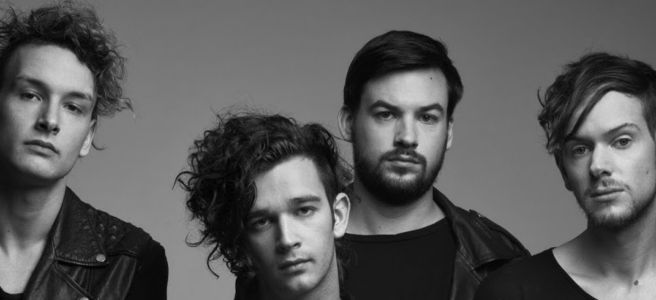
QUIZ: The 1975 Lyric, or Classic Teen Movie Quote?

1. “She can’t be what you need if she’s seventeen.” 

2. “I’m in love with Jesus Christ.”

3. “What happens to us in the future? Do we become assholes or something?” 

4. “We’re all human, we’re just like you man.”

5. “Who allowed you to be this beautiful?” 

6. “I don’t want your body, but I hate to think about you with somebody else.”

7. “Who needs affection when I have blind hatred?”

8. “Ugh, as if.” 

9. “Love yourself like someone you love.” 

10. “We accept the love we think we deserve.” 

11. “You’ve got a beautiful face but nothing to say.” 

12. “I want to go to the rooftop and scream ‘I love my best friend Evan!’”

13. “You just write about sex and killing yourself and how you hardly ever went to school.” 

14. “But the really amazing thing is, it is nobody’s goddamn business.” 

15. “Don’t fall in love with the moment and think you’re in love with the girl.”

16. “Why don’t you speak it out loud instead of living in your head?” 

17. “I just want to let them know that they didn’t break me” 

18. “We’re all pretty bizarre. Some of us are just better at hiding it.” 

19. “I put on this shirt, and I found your smell, and I just sat there for ages contemplating what to do with myself.” 

20. “Do you think they are maybe the same thing? Love and attention?”

***

***

***

***
Answer Key
1. The 1975 lyric
2. The 1975 lyric
3. Back to the Future
4. The 1975 lyric
5. Booksmart
6. The 1975 lyric
7. 10 Things I Hate About You
8. Clueless
9. The 1975 lyric
10. The Perks of Being a Wallflower
11. The 1975 lyric
12. Superbad
13. The 1975 lyric
14. Easy A
15. The 1975 lyric
16. The 1975 lyric
17. Pretty in Pink
18. The Breakfast Club
19. The 1975 lyric
20. Ladybird

The Trap of the No-Skip Album

If you’ve logged on recently, you might have noticed that online is bad. But in recent weeks, a sort-of-almost-maybe-kind-of-good trend has sprung up amongst the quarantined. Or at least, a trend that seems like it could be good at first glance.  You’ve seen it: the no-skip album challenge, the five perfect films, whatever that Bill Clinton thing is. 

These challenges offer a chance to bask in shared cultural connections and revisit some of our favorite pieces of art. They also offer a chance to stress the fuck out. 

I mean, what even is a no-skip album? Like I know definitionally what those words mean, but is it an album I’ve never once skipped a song on? Or an album where I love every song? An album where I like every song enough to give it a listen? Even my favorite albums of all time get boring if I’m not in the right mood. 

And is everyone else adhering to  the same rules? Or should I just pick my favorite few albums and call it a day? When I first started thinking of no-skip albums my mind flew to Channel Orange, but then… I looked at the track list. And yeah, it’s got some all-time great songs. More classics than any album really has a right to, in my opinion. But then there’s the slightly underwhelming forgotten tracks too. And the interludes! If I skip an interlude, is that no longer a no-skip album? 

And more importantly, what will other people think if I don’t include Channel Orange? Am I a fake Frank fan? Uncultured swine? And what if I include My Beautiful Dark Twisted Fantasy? Am I endorsing Kanye’s misogyny and absurdist political semi-ideology? 

Or what if I end up with just Springsteen, Bon Iver, Carly Rae Jepson, and Fleetwood Mac? #NoSkipAlbumsListSoWhite?

And don’t even get me started on the five perfect movies challenge. No movie is perfect, even the greatest films ever made. It’s A Wonderful Life was an easy inclusion for me, but the treatment of Annie (and other women) throughout is deeply troubling. Silence of the Lambs still takes my breath away, but at what point are gender non-conforming individuals going to stop being portrayed as deranged and dangerous? 

Truthfully, the challenge lies in putting together a list that shows just how cool, cultured, intelligent, and relatable you are. You need a mix of high brow and humorous, a list that shows you’ve got love for the classics but are in touch with the times,* one that includes diversity of experience but does not include Green Book

Ultimately, I think the problem with these challenges is that I am wildly insecure and need everyone to love and cherish me constantly. A therapist might say that’s unrealistic or self-defeating but joke’s on you, my insurance doesn’t have first-dollar mental health coverage so we’ll never truly know.

So I’ll just keep curating, desperately trying to hone my brand through my choices. As I write this, a friend has literally just tagged me in the Bill Clinton one. I think this is just albums I vibe with, right? Or is it ones I listen to after not inhaling a marijuana cigarette? My favorite jams for corporate-friendly center-left activism? 

Rest assured, I’ll stress about this one a lot too. 

*If you don’t have Moonlight or Get Out on your list, I don’t fuck with you anymore. Sorry, that’s the rules. 

The Fifth Peg

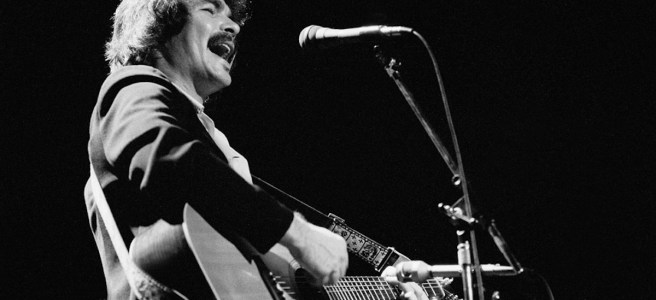
In 1970, Roger Ebert walked out of a movie he was reviewing for the Chicago Sun-Times and into the Fifth Peg, a folk club in Chicago’s Lincoln Park neighborhood. Out of “sheer blind luck,” he saw John Prine and wrote the first review Prine ever received.

Today, John Prine is in critical condition with COVID-19 symptoms. And the Fifth Peg is a La Colombe coffee shop, next door to a Freshii and down the street from both a Warby Parker store and the 4am bar where my dad’s Rolling Stones cover band plays sometimes. 

Life comes at you fast. But, re-reading Ebert’s review and thinking of the destruction that coronavirus has wrought on a personal and civic level, I’m struck by just how deeply the people and places in our life are intertwined. 

I like to think of a person or a place’s meaning both vertically and horizontally. Take the vertical meaning of an address like 858 W. Armitage, Chicago, IL 60614. Maybe today you passed it on a social distancing walk through a Lincoln Park neighborhood suddenly void of $2,000 baby strollers or designer labradoodles. Just a month ago you could have taken a date or a friend to coffee at La Colombe, sitting outside on an unseasonably warm day as you watched your fellow Chicagoans walk past. 50 years ago, that La Colombe was a packed folk venue where word of mouth led people from Steve Goodman to Ebert to come together and listen to a mustachio’d mailman sing about a guy who died because he couldn’t see through all the flag decals he stuck on his truck. And that venue, with a bar down one side and apartments up top, had been around since 1885—built a decade after the Chicago Fire but four years before the neighborhood was annexed by Chicago. You can think about John Prine’s meaning vertically too: You can draw a straight line from Hank Williams and Bob Dylan to Prine, and then extend Prine’s influence out to just about any songwriter today who picks up an acoustic guitar. 

Both Prine and the place where Ebert first saw him have horizontal meaning too. At the time Prine was performing in Lincoln Park, the wealthy and mostly white (even then) neighborhood existed in a complex urban context. There was the poor and mostly black Cabrini-Green housing project next door to the south, or the more integrated Lathrop Homes to the northwest. Just a year before, the Young Lords had held protests against gentrification in Lincoln Park and the CPD had assassinated Fred Hampton on the West Side. The Hancock building had just gone up a few miles to the south of the Fifth Peg, and meanwhile the city’s factories and stockyards were looking down the barrel of a decade of deindustrialization. Prine, too, could be defined in the context of what was going around him. Ebert did just that, contrasting Prine against peers who sang “adolescent acid-rock peace dirges” or “narcissistic tributes to themselves.”

We understand a neighborhood like Lincoln Park in part based on what it isn’t: it’s not Wicker Park, it’s not Hyde Park, etc. We understand a singer like Prine in part based on who he isn’t: as Ebert noted, he was way more Hank Williams and Bob Dylan than Roger Williams or Phil Ochs. And, right now, we’re experiencing this quarantine based on who we aren’t with: the friends, loved ones, and strangers whose company we never knew we could miss so badly until it was taken from us. 

Coronavirus will be a key point in our vertical memory. We’ll mark time based on what happened before or after the pandemic. The same way that Prine could probably mark his life based on what happened before versus after he got his first review. And I’ve never felt so crushingly aware of the horizontal space between us—the video chats with people who I would ordinarily see in person (or never think to video chat with in the first place), and the great effort it now would take to reach them. 

John Prine wrote perfect music for when you’re down and alone. And he wrote perfect music that has, and will continue to, bring people together. 


When I woke up this morning
Things were feeling bad
Seemed like total silence
Was the only friend I had


 or


Just give me one thing
That I can hold on to
To believe in this living
Is just a hard way to go


No matter when he passes—and we know that now isn’t his time, like so many others—he’ll live on in our memory. And his music will help us try to bridge the physical and emotional gap that separates us from one another. 

I filed a trademark for a “Come On Eileen” parody about COVID-19, but I only did it to stop anyone else from doing it

By now, you’ve probably seen the news, and I want to start by saying that I fully admit it: I filed a trademark on the concept of a parody song in which the lyrics to “Come On Eileen” are replaced with “COVID-19.”
 
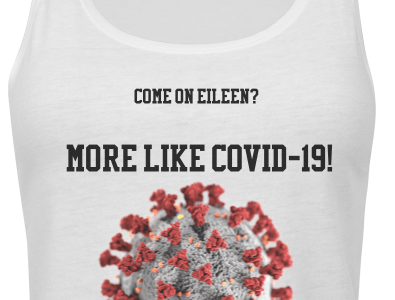
I’m aware of the speculation that has begun about my motives for this move. There are those who say I’m preparing some sort of viral video with pop stars and the like dancing (or perhaps “twerking”) to this topical wordplay. Others insist I’ll be hawking trendy “Come on Eileen? More like COVID-19!” crop tops outside of the nation’s top discotheques.
 
Family and friends, I want to assure you that nothing could be further from the truth.
 
The reality is that someone is going to weaponize the ease with which the novel coronavirus strain fits into this beloved ‘80s hit, whether we like it or not. By proactively filing this trademark, I hope to have the full weight of the American legal system at my disposal to stop them. In times of crisis, heroes emerge. And I intend to be that hero.
 
I’ll take down YouTube compilations, cut off the production of “humorous” neon fanny packs, and even unleash my attorneys upon unsuspecting meme accounts. All in the service of keeping your father from ever discovering the most formidable pun of this year’s coronavirus season.
 
So slander me all you want. Call me names like “putrid boy” and “rotten lad.” I do not care. I will do what I must to protect my country, and for that I will never apologize.

Picking a Campaign Song for Every Candidate Left

A great campaign song can transform an election. Bill Clinton had “Don’t Stop” by Fleetwood Mac, Barack Obama used “Signed, Sealed, Delivered, I’m Yours” by Stevie Wonder to great effect, and who can forget the old-timey background music from Birth of a Nation that Donald Trump presumably blared?

But when it comes to trademark songs, the current crop of candidates seems to be vacillating between incredibly blessed and just remarkably cursed choices. That’s not good enough. With that in mind, we set out to help. Here are the songs each of the Democrats contending for the nomination and also Mike Bloomberg should use this campaign season:

Bernie Sanders – Everything I Wanted, by Billie Eilish. Oh sure, he’ll promise you everything you say you want. Healthcare. Education. Jobs. A planet to inhabit. But what if, hear me out, it’s actually a socialist nightmare?!?! Not what you’d think???!!! If you’re being honest!!! (This article is a sponsored post provided by the Mike Bloomberg campaign. “Bloomberg 2020: You’re Gonna Get What You Deserve, You Little Shits.”)

Joe Biden – Ocean Eyes, by Billie Eilish. Say what you want about Joe Biden. No seriously, go ahead and talk about this and this and hell, even this. While you do that, I’m just gonna be staring into those baby blues

Elizabeth Warren – No Time To Die, by Billie Eilish. This isn’t a rallying cry for a comeback. Nor is it about any of the song’s lyrics. It’s more just a general symmetry between the song and the candidate. Like, they both seemed like they were gonna be hits. And people generally don’t hate either of them, exactly. But, like, did you remember this song existed? Probably not. Did anyone in Nevada remember that Liz killed the CEO of Wells Fargo? Certainly not.

Mike Bloomberg – Bad Guy, by Billie Eilish. This one’s fun because Mike Bloomberg’s NYPD illegally surveilled the city’s Muslim population and threw black men against the wall for fun. He is, in most modern ethical frameworks, a bad guy. It’s the titular role!

Pete Buttigieg – idontwannabeyouanymore, by Billie Eilish. Look, we were all about it for a minute. Abolish the electoral college? Yes daddy. Unpack the Supreme Court? Um, ok king! Parlay white male midwestern mediocrity into the most powerful position alive? I’M TRYING. But the more we got to know him, the less we wanted to be just like Mayor Pete. We’ll stick to more inspirational role models for now, like that girl who was selling feet pics to save Australia <3. 

Amy Klobuchar – All The Good Girls Go To Hell, by Billie Eilish. I will maintain until my dying day that Amy Klobuchar should have leaned into the ice queen aesthetic from day one. No one wants a nice senator who promises to win back Trump counties; we want a firebreather who will sucker punch your mom for not saying “God rest his soul” after mentioning Paul Wellstone. Also, this song includes the line “Peter should know better,” which is a pretty good summary of every time Amy opens her mouth on the debate stage. Case closed.

Tom Steyer – You Should See Me In A Crown, by Billie Eilish. Idk idk, he’s rich or something. I honestly don’t get this dude’s deal. He’s the second richest billionaire in the race and his plan seems to be siphoning off just enough support from Biden (???) to finish third in one of the first four states? This seems like a dumb plan. This campaign is dumb. 

Player Piano

Learning how to do something new sucks. Learning how to play piano especially sucks. And I can tell you that nothing sucks harder shit than the ego-demolishing moment when you realize that not only are you spending your precious time picking out the melody to “On Top of Ole Smokey,” but you’re not very good at it either. 

This year I decided that I was going to learn piano. I had played jazz saxophone through high school at a decent-enough level, so I had a vision of the basic competency I wanted to achieve. I was inspired by friends who were able to sit down and play just about any sort of music on the most flexible instrument in the world. A saxophone isn’t worth much without a backing band, but a piano player can fit in anywhere from the E Street Band (Bruce had an organist and a piano player) to a solo act (Keith Jarrett or, worse, Billy Joel). My goal for the end of the year is to be a decent enough piano player that I could sit in for at least one set with a jazz quartet and not embarrass myself. 

So that’s how I ended up with the cheapest (relatively, electric pianos tend to be priced in units of “car payments”) 88-key weighted keyboard money can buy. The keyboard’s synth setting might make Van Halen’s “Jump” sound like a restrained chamber piece, and I may still stumble through “The Can-Can” and bastardize “The Marine’s Hymn,” but I’m getting my money and time’s worth.

I came into this goal, like most resolutions, thinking that if I spent more time working toward a goal it would change me for the better. The idea was that, by playing music for at least five minutes a day, I would have a better sense of purpose, growth, play and joy. 

And dedicating yourself to something does change you, in a small way at least. I, for one, can now run through my scales in all keys, better conceptualize how the twelve notes conceptually fit together, and—most importantly—play the four-bar piano riff at the start of “Closing Time.” See, positive change. 

But doing something for the sake of doing it doesn’t inherently lead to big-picture change. I’m not magically calmer or more meditative about life just because I spent 30 minutes learning how to comp ii-V-I changes (Damien Chazelle, you’re not the only white guy who can make basic jazz references). If anything, I’ve learned that adding something to my plate—even a hobby that’s for my own enjoyment—has the capacity to increase stress, especially since now there’s something else to feel like you’re missing out on if you’re crunched on time. It’s the same as anything else: if you read more, you’ll know more things; and if you lift more weight, you’ll get stronger. But these small changes won’t magically lead to a bigger alteration in your life (becoming happier, becoming more satisfied with how you look, defeating the devil in a fiddle challenge, etc.) without broader reflection on how you’re spending your time, why, and for what purpose.

Nobody would ever accuse me of being overly reflective. But maybe things like learning piano is an attempt to be. I can say, at the least, that I’ve learned a lot more than just how to play “Yesterday” off of sheet music that I last opened in 2004 (sheet music that’s almost as old as America’s military presence in Iraq). It’s interesting to see where I’m willing to cut corners (“Nobody’s going to know if I didn’t nail ‘Scarborough Fair’”) and what will unleash something inside myself that keeps me glued to my seat playing something over and over no matter how dumb it is just for the sheer pleasure of making it happen (again, “Closing Time”). 

I feel especially far removed from the 17-year-old who was able to glide through far more advanced music with seeming ease. But I wonder how much of that physical and mental dexterity was a product of my age at the time, and how much I can get back.