What Are Consultants Doing During the COVID-19 Pandemic?

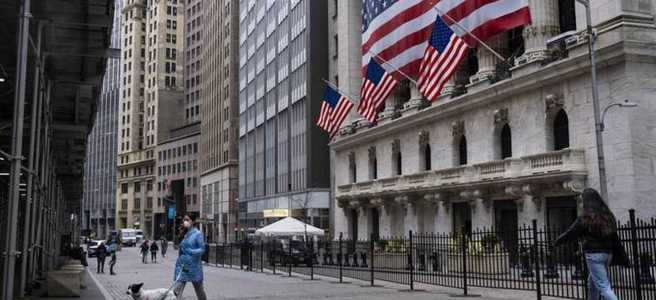
If the Jason Reitman classic Up in the Air and vague conversations with friends’ boyfriends have taught us anything, it’s this: consultants spend the vast majority of their time getting rich for doing nothing—and they spend the rest of their time unnecessarily firing people. With COVID-19 destroying the national economy, the meat of their jobs is now very sadly being done for them. This has left us to wonder: What are our useless consultants doing during this crucial time in American history? Here are 12 guesses.

  1. Seriously thinking about joining a non-profit before doing cocaine off a marble countertop and smacking their own ass
  2. Asking daddy Goldman if they should buy masks for their money
  3. Kicking themselves for not stockpiling hand sanitizer to sell for a sweet, sweet profit
  4. Compounding interest
  5. Worrying this will finally be the moment everybody realizes we should pay teachers more and not give $130K to a fresh econ grad just because he’s really good at two Excel reports
  6. Circling back
  7. Taking advantage of Brooks Brothers’s limited-time 30% off sale.
  8. Spontaneously Facetiming acquaintances about an amazing opportunity to get on the ground floor of their new start up
  9. Bathing in Purell 
  10. Whispering “ew” into their N95 masks every time they walk past a poor on the street
  11. Touching base
  12. Praying to God to let their grandparents die for the sake of the stock market

Minutes from the All-Apartment Meeting of My Quarantine Mt. Rushmore

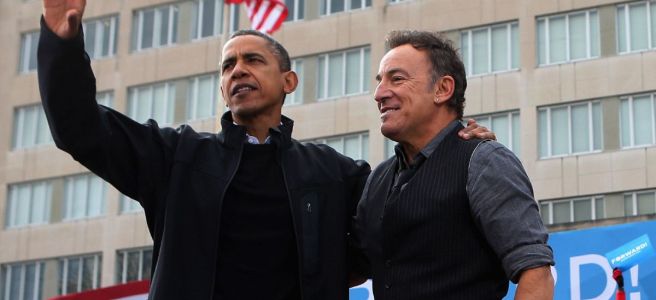
Stephen (hereinafter, the “Recording Secretary”): Thank you for gathering here today in the living room of my 600-square-foot apartment, Bruce Springsteen, Barack Obama, Michael Jordan, and Abraham Lincoln. It’s a pleasure having you all here for our first all-apartment meeting. Now I’m sure you have a lot of quest — 

Michael Jordan: Yeah, first of all, what are we all doing here? 

Recording Secretary: That’s a good question. Things certainly are pretty crazy these days. As best I can tell, somebody asked me, “Who is on your Mt. Rushmore of people you’d want to be quarantined with,” and I listed off you four, and then this sort of happened. 

Abraham Lincoln: What’s Mt. Rushmore?

Recording Secretary: Well, so, there’s this range of hills in what was formerly the Dakota Territories that is considered sacred land by the Sioux Tribe and —

Barack Obama: Let me get this straight. You got to choose the four people to be cooped up with during a pandemic, but you didn’t choose your girlfriend? 

Recording Secretary: Yes, thank you Mr. President, that’s a very astute observation, and one that I can assure you has already been raised several times.

Bruce Springsteen: I actually have something I’d like to address now that we’re all gathered together. 

Recording Secretary: Sure, you’re the boss.

[Everybody groans but Lincoln, who is preoccupied studying an electrical socket.]

Springsteen: Well, I’d like to say that I’ve been sensing a lot of… competitive tension in the apartment recently. [Looks at Jordan] I mean, just the other day I missed a small spot while doing dishes, and Jordan stared daggers at me and then lashed into a tirade about how my early 70s work sounded like “nothing but a shitty-ass cheap-motherfucking-knockoff of if Bob Dylan and Van Morrison’s did the audio equivalent of two girls one cup.” 

Obama: Jesus. But I know what you mean. Just the other day I heard Jordan call Stephen “a slower, whiter, less-Twitter-woke version of broken-back-ass Steve Kerr” just because Stephen roasted the brussel sprouts a bit too much. 

Recording Secretary: I don’t want to talk about — 

Springsteen: Yeah! And then I took $25k off Jordan after we bet on the Lincoln–Obama debate over universal health care, and he wouldn’t let it go until we doubled or nothing on our pick-up basketball game. 

Recording Secretary: Yes, yes, about that. I really don’t think those teams were fair. Maybe next time it shouldn’t be me, Obama, and Bruce versus Jordan and Lincoln.

Lincoln: If I may, I have a question. Why did Jordan keep calling me “Will Perdue–looking ass” during the game? 

Obama: My fellow teammates, I am deeply troubled by the fact that we lost five straight games by a collective score of 105–7. We will do better. We. Must. Be. Better.

Jordan: You all are some weak motherfuckers. Especially stovepipe over here—I bet I could’ve dropped 50 on Stonewall Jackson before this chin-strapped jagoff could take a typhoid-laced dump.

Springsteen: Abe was on your team!

Jordan: Yeah, but I’m also getting pretty tired of hearing him remind me that he was friends with Frederick Douglass. 

Lincoln: Hey man, Republicans buy shoes too.

Springsteen: You’re, like, not a Republican any more! 

Recording Secretary: Mike, I’d also like to raise an anonymous comment I received complaining that you are “absolutely draining our internet with your online poker habit” — 

Jordan: I don’t know anything about that.

Recording Secretary: Well, I don’t want to have to make you retire early from our 2K tournament if —

Jordan: said I don’t know anything about that. 

Lincoln: Excuse me, but a thought occurred to me. Why does Mr. Springsteen over here always count off “Hu-n, Hu-oo, Hu-ree, Hu-r” every time he’s about to start a task? 

Springsteen: Clearly you’ve never seen the American dream light up ahead of you like the headlights of a ‘59 Chevy down the Jersey turnpike

Obama: I think maybe we could all spend a little less time pestering each other, like some people around here who keep coming to me about things like “why the fuck is goddamn Grant on a bill that’s worth ten times more than mine” or “what modern magical marvel is behind these menthol cigarettes”? 

Lincoln: I’m sorry, I’m not right in my head. Anyways, who wants to play Catan? 

Jordan: Down. And I’ll bet fifty grand that Lincoln can’t raise the biggest army again.

[Barack throws Stevie Wonder on the Sonos, and we play Catan. It’s awesome. Later, Barack and the Recording Secretary go out to walk Bo and get carryout from Valois while Bruce and Lincoln roll a spliff and talk about resenting their fathers. Jordan has disappeared to play 36 holes of night golf before sunrise. High fives all around. Everybody in attendance agrees that the Recording Secretary’s Mt. Rushmore decision was the best thing to ever happen to us.]

Meeting adjourned and the minutes submitted for final approval.

FAQs for the Self-Quarantiner

Q: Should I email my neighbors about the excessive noise they might hear as I jump around because of the fitness app I downloaded? 
A: Oh, you lift?

Q: Why did I buy so many beans?? I don’t eat beans!
A: Eat your fucking beans.

Q: Can I have a little doorknob lick? As a treat? 
A: No!!

Q: Why was Amy Adams’ character in Her? She seemed pretty unnecessary?
A: Your guess is as good as ours. 

Q: Am I no longer practicing social distancing if, while working out, I jump so hard that I open up a hole in the floor, causing me to fall approximately 8 feet into the living room below me and onto my neighbor’s portly 7-year-old as he plays Boggle? 
A: This is a meet-cute.

Q: Can I commit a crime and use social distancing as an excuse to not let the police in? 
A: Only if Anthony Fauci said you could.

Q: Can I complain about my neighbors smoking weed?
A: Fuck off dude, stand by your fellow man. 

Q: How stocked up on pickles is too stocked up on pickles?
A: Too much is never enough.

Q: Exactly how disinfected does an orgy need to be for it to be acceptable? 
A: As long as assholes are bleached, you should be good.

Q: When the fuck will I get to watch Fast 9 in theaters?
A: Not soon enough… not soon enough.

Q: Do I have to have my video on while using Zoom?
A: Only if more than 40% of the participants are also sharing video.

Q: What is Pep Boys doing in response to the COVID-19 outbreak? 
A: Furloughs!

Q: Can someone please take some of these beans!!!
A: No, eat up bean boy.

Q: How many people need to get infected before I can get hella racist about it?
A: Go lick a doorknob, asshole.

Q: How long does it take for Amazon to deliver a 14th-century bird doctor mask?
A: Not as long as it will take for the package to sit in your front hallway while you wait for the virus to fall off it and die. 

Q: Will my gimp mask protect me?
A: Not if you’re using it the right way 😉

Q: Okay, I’ll just be direct here: how much is the Social Security burden going to be lightened?
A: On advice of counsel, we have redacted this answer.

Q: Asking for a friend: Can anyone sneeze in Mitch McConnell’s face, just for fun?
A: Oh hell yeah. Especially if you’re showing symptoms.

Q: I stayed inside today, am I a hero? 
A: Yes, you make healthcare workers look like lazy pieces of shit!

The Quarantiner’s Monthly Budget

someone who is good at the economy please help me budget this. my family is dying.

  • Rent: $0 (we on strike #StandWithTheCheesecakeFactory)
  • Groceries: literally whatever the cashier tells you, don’t even listen just take what he’ll give you
  • Deodorant: $0
  • Uber: $0 (net savings: $1,700)
  • Hand soap: $1,700
  • Laundry: $0
  • Restaurant delivery: $2,500 (support local businesses!)
  • Tip: 35%
  • Bleach: $3,900
  • Gym membership you forgot to cancel: $50
  • Amazon orders: $1,200
  • Netflix: again, they kind of just get to name a number at this point
  • Hulu: Not even a quarantine is getting us to subscribe
  • Shaving cream and razors: $0
  • Gas: $0
  • Puzzles: $500
  • Puzzle Shipping Rate: $9.99
  • Zoom membership: $14.99 somehow

Conference Call Do’s and Don’ts

If you’re anything like us, you’re a busy business person who does important business. That probably means you had to trade board rooms for Zoom rooms, thanks to The Ro Ro. However, that’s no need to worry. We’re here to help you with important do’s and don’ts for conference call etiquette:

Do: Keep your camera on at the start of the call to pressure everyone into turning theirs on too, even if — especially if — they don’t want to.

Don’t: Wear pants. Why would you wear pants, prude?

Do: Stroke the nearest dog, cat or roommate within reach to look intimidating while you speak.

Don’t: Accept invites for “virtual happy hours” from work.

Do: Go five-drinks deep with your friends on Google Hangouts this Wednesday.

Do: Ask everyone to repeat themselves, no matter how well you can hear them.

Don’t: Speak. This is like every other meeting. The goal is to say as little as possible.

Do: Interrupt others and stammer as if you have something to say then sit silently for minutes until everyone realizes this was a mistake and cancels the call.

Don’t: Ask “how is everyone doing?” It’s bad. We’re all doing bad. This is bad. 

Do: Zone out and ignore the call until somebody asks you a question, and then say, “Sorry, I think the feed cut out” 

Don’t: Set your Zoom background to the ISIS flag. Or do! Whatever, it’s The Purge!

Do: Mute your camera when you have to fart, but show with your facial expression that you are very clearly farting.

Don’t: Freebase blow. It’s difficult to share virtually and you can’t assume all other call participants have access.

The Fifth Peg

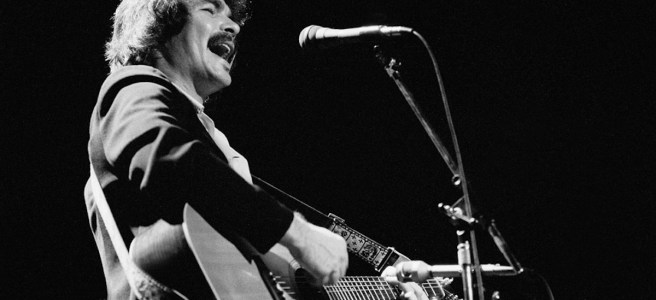
In 1970, Roger Ebert walked out of a movie he was reviewing for the Chicago Sun-Times and into the Fifth Peg, a folk club in Chicago’s Lincoln Park neighborhood. Out of “sheer blind luck,” he saw John Prine and wrote the first review Prine ever received.

Today, John Prine is in critical condition with COVID-19 symptoms. And the Fifth Peg is a La Colombe coffee shop, next door to a Freshii and down the street from both a Warby Parker store and the 4am bar where my dad’s Rolling Stones cover band plays sometimes. 

Life comes at you fast. But, re-reading Ebert’s review and thinking of the destruction that coronavirus has wrought on a personal and civic level, I’m struck by just how deeply the people and places in our life are intertwined. 

I like to think of a person or a place’s meaning both vertically and horizontally. Take the vertical meaning of an address like 858 W. Armitage, Chicago, IL 60614. Maybe today you passed it on a social distancing walk through a Lincoln Park neighborhood suddenly void of $2,000 baby strollers or designer labradoodles. Just a month ago you could have taken a date or a friend to coffee at La Colombe, sitting outside on an unseasonably warm day as you watched your fellow Chicagoans walk past. 50 years ago, that La Colombe was a packed folk venue where word of mouth led people from Steve Goodman to Ebert to come together and listen to a mustachio’d mailman sing about a guy who died because he couldn’t see through all the flag decals he stuck on his truck. And that venue, with a bar down one side and apartments up top, had been around since 1885—built a decade after the Chicago Fire but four years before the neighborhood was annexed by Chicago. You can think about John Prine’s meaning vertically too: You can draw a straight line from Hank Williams and Bob Dylan to Prine, and then extend Prine’s influence out to just about any songwriter today who picks up an acoustic guitar. 

Both Prine and the place where Ebert first saw him have horizontal meaning too. At the time Prine was performing in Lincoln Park, the wealthy and mostly white (even then) neighborhood existed in a complex urban context. There was the poor and mostly black Cabrini-Green housing project next door to the south, or the more integrated Lathrop Homes to the northwest. Just a year before, the Young Lords had held protests against gentrification in Lincoln Park and the CPD had assassinated Fred Hampton on the West Side. The Hancock building had just gone up a few miles to the south of the Fifth Peg, and meanwhile the city’s factories and stockyards were looking down the barrel of a decade of deindustrialization. Prine, too, could be defined in the context of what was going around him. Ebert did just that, contrasting Prine against peers who sang “adolescent acid-rock peace dirges” or “narcissistic tributes to themselves.”

We understand a neighborhood like Lincoln Park in part based on what it isn’t: it’s not Wicker Park, it’s not Hyde Park, etc. We understand a singer like Prine in part based on who he isn’t: as Ebert noted, he was way more Hank Williams and Bob Dylan than Roger Williams or Phil Ochs. And, right now, we’re experiencing this quarantine based on who we aren’t with: the friends, loved ones, and strangers whose company we never knew we could miss so badly until it was taken from us. 

Coronavirus will be a key point in our vertical memory. We’ll mark time based on what happened before or after the pandemic. The same way that Prine could probably mark his life based on what happened before versus after he got his first review. And I’ve never felt so crushingly aware of the horizontal space between us—the video chats with people who I would ordinarily see in person (or never think to video chat with in the first place), and the great effort it now would take to reach them. 

John Prine wrote perfect music for when you’re down and alone. And he wrote perfect music that has, and will continue to, bring people together. 


When I woke up this morning
Things were feeling bad
Seemed like total silence
Was the only friend I had


 or


Just give me one thing
That I can hold on to
To believe in this living
Is just a hard way to go


No matter when he passes—and we know that now isn’t his time, like so many others—he’ll live on in our memory. And his music will help us try to bridge the physical and emotional gap that separates us from one another. 

Hey, You. Congrats On That Loaf Of Bread You Baked.

Hey, buddy.

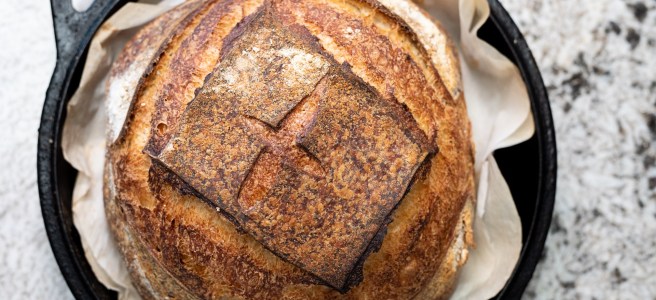
I was just strolling through Instagram, as I’ve been doing almost ad nauseam for the last week, and I saw something that caught my eye: a round, rustic loaf of bread posing on a cooling rack.

My god. Did you bake that yourself? 

I mean—I am truly in awe. As you mentioned in your own caption, it came out quite well. Have you always baked bread? Did you work in une boulangerie? Was your father a lowly baker, always struggling to make ends meet but deeply fulfilled to create something that he could sell at affordable prices to his beloved community? Did he show you how to bake that?

Oh. No? It’s your first time? Ah. I see. Ohhh, that’s right, you did mention that in your caption. I must have missed that. Maybe I was just distracted by that luscious golden loaf, the finest loaf of bread I’ve ever seen in my pathetic life.

Well, I just dropped in to say that I am endlessly happy for you for this loaf of bread. I’ve never seen something so perfect, certainly not 45 seconds ago when I was browsing an earlier section of my Instagram feed. I cannot wait to see the rest of the loaves of bread you bake, and have total faith that you will post every single pic of them so I can see them on my shitty, shitty, shitty Instagram feed.

What My Current Most Commonly Used Phrases Meant, Six Weeks Ago

  1. I’m not touching that unless you promise me it was recently bleached. We’re gonna do buttstuff now.
  2. Yeah, my parents are social distancing right now. Trial separation 😦
  3. Oh I LOVE Dr. Fauci! Dr. Birx is cool too for sure, but Fauci just slaps. I’m going to put some shitty EDM for you now, and you’ll have to pretend you know these DJs.
  4. I’ve been in isolation for the past week, so that’s good. I’m at the “acceptance” part of my mental health spiral.
  5. Let’s flatten that curve!! I am the world’s most insensitive abortion provider.
  6. Did you break down the lipid envelope while you were in the bathroom? Which drugs were you mainlining next to the toilet?
  7. Hey everyone, please don’t bring up Imperial College tonight; we’re trying to make this a safe space. I am extremely woke and understand that imperialism was bad.
  8. Who wants to do a Google hangout on Friday? Orgy time 🙂

Our Slow Motion Catastrophe

Throughout our lifetime, national traumas have come as something of a shock. Levees in New Orleans suddenly breaching. Banks closing and markets collapsing. Boeing 767s streaking across a bright blue sky.

And while most of us are still using euphemisms to describe the current situation—“unprecedented times,” “everything that’s going on,” “the current situation”—the projections from scientists, academics, politicians, and public health officials all align: we’re headed for a catastrophe of historic proportions. Slowly (for now), agonizingly, we are inching toward a precipice of trauma that few of us are prepared for.

Even with social distancing and a nationwide sprint to flatten the curve, it’s more likely than not that the train has left the station. Where previous tragedies have caught us off guard, we have a decent idea of where this one is probably heading. And it’s not pretty.

As strange and awful as the past two weeks have been, I can’t shake the feeling that in a month (or two, or six, or 18), we’ll look back on this time as the fun part. It’s been a lot of Zoom happy hours and learning to bake. Catching up on shows, sleeping in, skipping the gym. 

What it feels like we’re all ignoring to some degree—intentionally on my part, in an effort to stay sane—is what comes next. 

We see what’s going on in Italy and Iran and we think something along the lines of “man, I hope that doesn’t happen here.” The reality is that it’s entirely possible, and maybe even likely, that the disaster in Italy is just beginning; that in a week or two the scale of the loss will be astronomically higher and the situation we’re witnessing there now will seem almost innocent by comparison. And that we’ll find that for all our recent efforts, we already put ourselves on that same track months ago.

Before I go further, I should stop to say that there is broad consensus that the types of social distancing efforts underway in Italy, France, Spain, New York, California, Illinois, and elsewhere do work. As contagious as this virus is, it doesn’t float through the wind; it usually requires human-to-human contact to transmit, and large scale restrictions on physical human interactions should greatly reduce the spread. 

But we don’t know 1) how strictly implemented and well-followed these restrictions will be, and 2) how widely the disease spread before we started going all out to stop it. The evidence from Europe suggests that the answer to #2 is likely much worse than we would hope.

Which is why it’s time to begin grappling with what is likely to come. That does not mean panic or despondence; we each have a significant role to play in flattening the curve and preventing transmission. But it does mean starting to process what’s next.

According to The New York Times, Columbia researchers estimate we’ll soon see hundreds of thousands of cases per day for a period of a month or more, even with some control measures. That number is significantly lower, but still in the tens of thousands, with severe control measures. 

The infamous Imperial College study projects more than a million Americans could die in spite of the steps governments are now taking. Even if they were able to more fully replicate efforts in Wuhan and South Korea that go beyond lockdowns—including widespread testing, mandatory isolation for those who test positive, and mandatory quarantine for those with symptoms—20,000 or more are likely to perish in the U.K., according to the study. The authors didn’t model this scenario for the U.S., but Britain has a population about 1/5th of the United States. 

So it’s staggering. And horrifying. And I hope dearly that it’s not inevitable. But what if it is? What if tens of thousands dead is the best case scenario.

Right now, unless you worked on the set of the Mr. Rogers movie or play basketball for a living, you probably don’t personally know anyone who has tested positive for COVID-19. But you will, that much seems almost certain. 

Fortunately, even if the medical system gets overwhelmed, experts say the vast majority of those infected with the virus will recover fully on their own. Thank God. 

But I can’t stop thinking about that projection of two million dead even with controls in place. That’s about .6% of the population. In some localities, it will surely be higher. 

Think about how many people you know. A few hundred? Maybe a couple thousand, depending on your life experiences? If this goes how they say it will—even with everything we’re doing to stop it—this is likely to touch all of us in a way much deeper and much more traumatic than the inconvenience of staying home for months on end.

And as awful, horrendous, sickening, and hopefully wrong as that possibility is, it’s time for all of us to begin processing it. 

We’ll Get Through This

Best read while blasting Bruce Springsteen’s “Lonesome Day,” or whatever uplifting piece of Americana you prefer. 

These are dark times. Unprecedented times. And things are going to get worse before they get better. 

But we’ll get through this. We’ll make our way through like we’ve done before and will do again. We’ll see each other on the other side—we’ll hug one another, gather together, and celebrate all of what’s been taken from us. 

We’ll come through hopefully smarter, hopefully better prepared for the next challenge. 

We’ll come through with a better appreciation for what’s been lost. The friends whose company we savored. The places where we congregated to celebrate life, love, and passion. The stadiums, churches, restaurants, and bars. We’ll kiss our loved ones and take in their presence with a renewed eye toward what they mean to us. 

We’ll be scarred, and we’ll be scared, but we’ll start to heal. Some wounds won’t though. Some people will be lost, and for that we can never forget or forgive the cowardice, idiocy, and hubris of the officials who failed us. And we’ll need to support those who have been so hurt—financially, physically, emotionally—from this period that it will be difficult for them to become whole when it’s over. 

I hope that we come out of this with a reaffirmed sense of the resilience and compassion that we like to tell ourselves we share as Americans. And I hope we’ve learned just how interconnected we are the whole world over—how we rise, and we fall, together. 

So take care of yourself, and take care of one another. We need each other to get through this. And then we need to make sure this never happens again.